


Many Couples Come to Therapy Wanting Help Communicating But Often the Real Struggle Runs Much Deeper

By the time many couples arrive in therapy, they are exhausted.
They have usually had the same argument dozens, sometimes hundreds, of times before. What begins as a conversation about something small slowly turns into another evening of tension, silence, defensiveness, anger, or emotional distance.
One person feels unheard. The other feels criticised. Both leave the conversation feeling alone.
And somewhere underneath it all sits the quiet question many couples are too afraid to say out loud:
“How did we get here?”
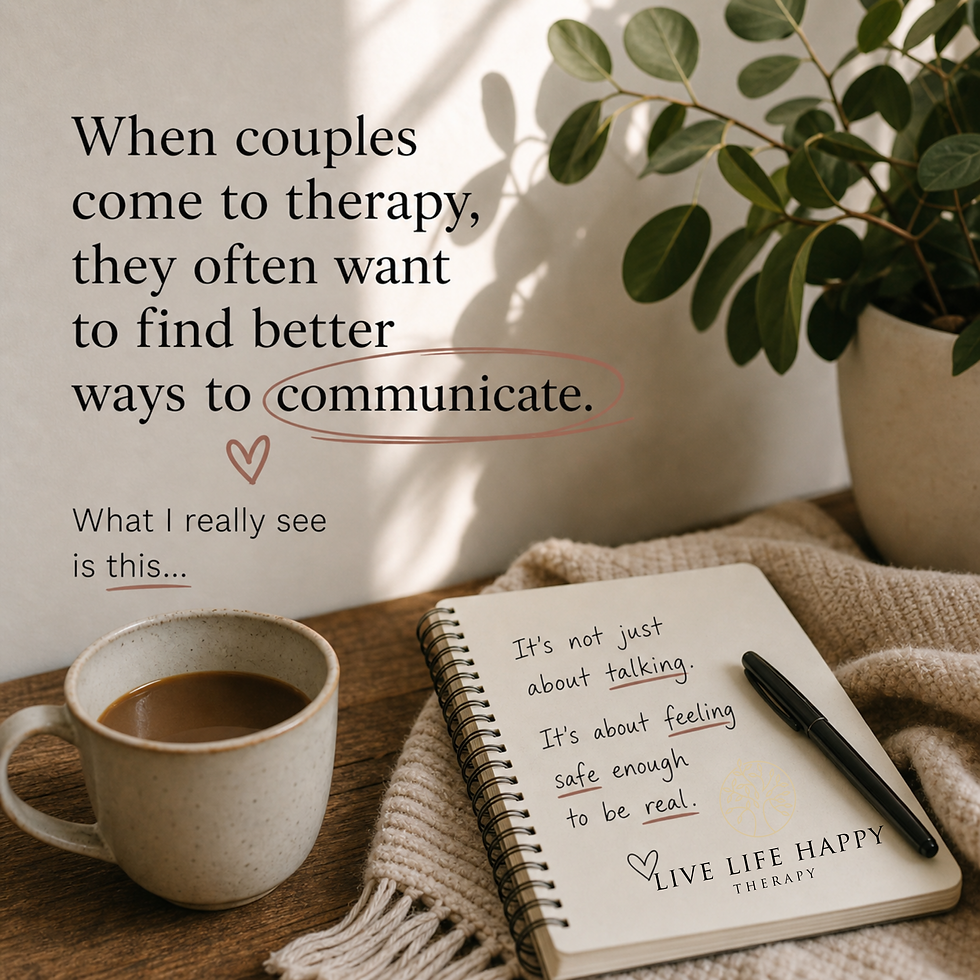
Most couples initially believe the problem is communication. They want to learn how to argue less, listen better, stay calmer, or finally get their partner to understand them.
But relationship conflict is rarely just about communication.
Because underneath most conflict sits something much more vulnerable.
The Argument Is Usually About More Than the Argument
Arguments about dishes, parenting, intimacy, money, family, or tone of voice are often carrying something far deeper emotionally.
Sometimes one partner is longing to feel important, chosen, or emotionally close, while the other is desperately trying not to fail, disappoint, or feel overwhelmed.
One partner may become louder, more emotional, or more reactive because they are terrified of disconnection. The other may shut down, go quiet, or withdraw because conflict itself feels emotionally unsafe.
Neither person is usually trying to hurt the other. But when relationships become emotionally strained, couples often stop seeing the vulnerability underneath each other’s reactions. Instead, they begin seeing only the defence. The anger. The silence. The criticism. The shutdown.The avoidance.
Over time, couples can begin to “other” one another, experiencing each other less as someone they love and more as someone they need to protect themselves from.
Instead of:
“My partner is hurting,”
it slowly becomes:
“My partner is against me.”
That shift can feel heartbreaking inside a relationship.
The Cycle Couples Get Trapped In
One of the most painful parts of relationship conflict is that couples often become trapped in patterns they no longer know how to get out of. One partner may follow the other from room to room trying to repair things before bed, desperate for reassurance that everything is okay. The other may feel emotionally flooded, cornered, or overwhelmed and pull away even more.
The more one pursues, the more the other withdraws. And eventually, both people feel unseen.
This is often the moment couples stop feeling like a team. Instead of fighting for the relationship, they begin fighting inside it.
Why Conflict Can Feel So Intense
Relationship conflict has a way of touching much older emotional wounds. A partner becoming distant after an argument may unconsciously trigger feelings of abandonment. Criticism may awaken shame or feelings of not being good enough. Emotional withdrawal can leave someone feeling invisible or deeply alone. This is why some arguments feel far bigger than the issue itself.
The nervous system is not simply reacting to the conversation happening in the present moment, it is reacting to what the moment emotionally means.
For some people, conflict feels frightening because closeness once felt unpredictable or unsafe. For others, emotional distance feels unbearable because connection was inconsistent or unavailable earlier in life.
Most couples are not consciously aware this is happening while they argue. They simply know they keep ending up in the same painful place.
Learning to Stay Connected While Different
One of the hardest parts of relationships is learning that love does not remove difference.
We will disappoint each other sometimes. We will misunderstand each other. We will see the world differently. We will hurt each other unintentionally.
Healthy relationships are not relationships without conflict. They are relationships where two people slowly learn how to stay emotionally connected during moments of difference, hurt, stress, and vulnerability.
For many couples, this takes time. This work can feel slow at times because it asks both people to move beyond blame and begin looking underneath the protection. Beneath the defensiveness. Beneath the shutdown. Beneath the anger. And that can feel deeply uncomfortable.
It is vulnerable work to let your partner see the fear underneath the reaction. It is vulnerable to soften when you have spent years protecting yourself.
But when couples begin understanding the cycle they are trapped in, rather than seeing each other as the enemy, something often starts to shift.
Conversations can begin feeling safer. Repair becomes easier. Defensiveness softens. Emotional closeness slowly returns. Not because couples become perfect communicators, but because they begin experiencing each other differently. The goal of couples therapy is not to eliminate conflict completely. It is to help couples feel less alone within the relationship and create a safer, more emotionally connected way of relating to one another.
At Live Life Happy Therapy, I offer couples relationship therapy in Derbyshire and online across the UK, helping couples understand the emotional patterns underneath conflict and build more secure, connected relationships together.


Comments