


When Social Situations Create Distance Between You and Your Partner

You walk into a room together. For one of you, it feels easy. Familiar faces, warm greetings, conversations that pick up where they left off. There’s a sense of belonging without having to think about it.
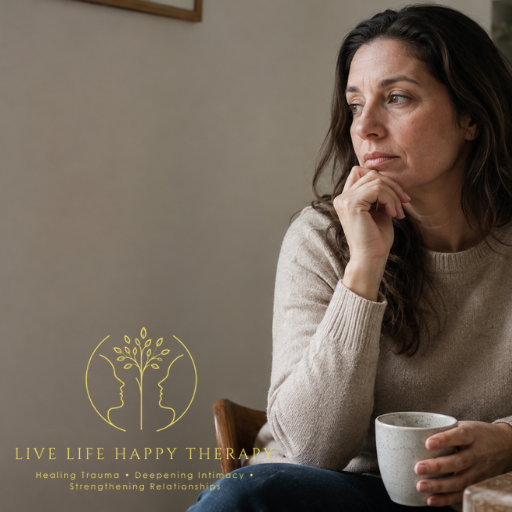
For the other, it can feel very different. You say hello, try to join in, but something doesn’t quite land. The responses feel shorter. The connection doesn’t open up in the same way. You find yourself hovering on the edge of conversations, waiting for a way in that doesn’t always come.
Nothing obvious has happened. No one has said anything unkind. And yet, something feels off.
Often, this is where the experience starts to turn inward. The person on the outside might begin to question themselves - Am I overthinking this? Have I done something wrong?
While the other partner is having a completely different experience, moving easily between people, not noticing anything unusual, assuming everything is fine.
Both experiences are real.But they don’t match.

It’s what happens next, between the two of you, that tends to matter most
This is often where the conflict begins to build, not necessarily because of what happened in the room, but because of how it’s experienced and responded to afterwards. One of you might try to put words to it on the way home.Something like, “That felt a bit uncomfortable,” or “They were quite off with me.”
Underneath that is often something deeper, a sense of having felt a bit invisible, or not quite included.
The other, not having felt it in the same way, might respond with genuine confusion.“Really? I didn’t notice anything.”“They seemed fine to me.”
From their side, it can feel like something small is being turned into something bigger than it was. From the other side, it can feel like something that mattered is being brushed aside.
There’s no intention to dismiss.But it can land that way.
And so a pattern can begin to form.
One partner, already feeling a bit on the outside, starts to push their point a little more, trying to be seen, to be understood. The other begins to feel frustrated or unsure how to respond because from where they’re standing, it doesn’t quite make sense. And without realising it, you can both end up moving further apart.
Because what’s being looked for in that moment isn’t a different perspective, it’s a sense of being understood.
One begins to feel alone in it. The other begins to feel unsure what’s expected of them. And something small and social starts to become something more relational.
What often gets lost here is that both positions make sense.
If you’re the one who felt on the outside, it’s not just about the group. It’s about what it was like to stand there, trying to find your place, and not quite being met. If you’re the one who felt comfortable, it can be hard to grasp something that didn’t touch you in the same way. From where you’re standing, nothing significant happened.
But the impact isn’t measured by what was visible. It’s measured by how it was experienced.
In these moments, the shift isn’t about agreeing on what happened.
It’s about recognising that two different experiences can exist side by side, and both matter.
When that happens, something softens.
The conversation moves away from:“Was it really like that?” And towards:“What was that like for you?”
There’s often something quieter underneath it all.
Not a need to fix the group, or change the situation, but a need to feel connected within it.
To know that even if the room doesn’t quite open up, the relationship still does.
Sometimes that looks like small things.A glance across the room.Looping back into conversation together.A sense that you haven’t been left to navigate it alone. And sometimes, it also means being honest about the environments you find yourselves in.
Not every space will feel like a natural fit for both of you. Not every group will offer the same ease of connection. That isn’t a failure on either side. But it is something worth noticing, rather than pushing through.
Because feeling out of place happens.
But feeling alone with that experience in your relationship is often what makes it harder to carry.
And when that part shifts, when there’s more understanding, more awareness of each other in those moments, the experience itself often becomes much easier to navigate.
Even if the room hasn’t changed.


Comments