


Why Do I Feel Responsible for Everyone Else’s Feelings?

You notice your partner is quiet and immediately wonder whether you have done something wrong. A friend sends a shorter message than usual and your mind starts searching for a reason.
Someone you care about is disappointed, upset or stressed, and even when you know logically that their feelings are not yours to fix, you still feel an urge to make things better. Perhaps you find yourself carefully choosing your words, avoiding difficult conversations or saying yes when you really want to say no. You may spend a lot of time thinking about how other people are feeling - and very little time asking yourself what you need.
If this sounds familiar, you may have developed a pattern of taking too much responsibility for other people’s emotions. And although it can look like kindness, thoughtfulness or being “good at looking after people”, underneath it can be exhausting.
When Caring Becomes Emotional Over-Responsibility
Caring about the people around us is an important part of healthy relationships.
We naturally want to comfort someone we love when they are hurting. We may reflect on our behaviour if we have upset somebody. We compromise, apologise and try to understand another person's perspective.
But caring about someone's feelings is different from believing you are responsible for managing them:
Emotional over-responsibility can sound like:
“I need to make sure everyone is okay.”
“If they're upset, I must have done something wrong.”
“I don't want to disappoint them.”
“It's easier if I just keep the peace.”
“I should be able to make them feel better.”
“If I say what I really think, they might be angry with me.”
“I feel selfish when I put myself first.”
Over time, you may become highly attuned to subtle changes in other people.
A sigh, a change in tone, a delayed reply or a different expression can be enough to make you wonder what has happened. Your attention moves away from your own experience and towards theirs: Are they okay? Are they annoyed with me? What do I need to do?
Why Do I Feel Responsible for Other People's Emotions?
Patterns like this rarely appear from nowhere. For some people, being very aware of other people's emotions was once useful. Perhaps you grew up in an environment where keeping someone happy helped things feel calmer or safer. Maybe a parent was unpredictable, emotionally unavailable, easily upset or relied heavily on you emotionally. You might have learned to notice changes in mood before anyone said anything.
You may have become the easy child, the sensible one, the peacemaker or the person who did not cause problems. In other families, love or approval may have felt connected to being helpful, achieving, behaving well or meeting expectations.
Gradually, you may have absorbed a message such as: Other people's happiness tells me whether I am doing okay. These patterns can continue long after the original circumstances have changed. As an adult, you may understand intellectually that you cannot control how everyone feels - yet emotionally, another person's disappointment can still feel deeply uncomfortable.
People-Pleasing Is Often About More Than Being Nice
People-pleasing is sometimes described as simply needing to learn how to say no.
But for many people, there is much more happening underneath. Saying no might bring up guilt. Expressing a need might create anxiety. Disagreement might feel threatening. Someone being disappointed with you might feel almost unbearable. So you adapt. You explain yourself. You soften what you really want to say. You take on extra responsibility. You anticipate what other people might need before they even ask. And because you are often capable, thoughtful and dependable, the people around you may come to rely on this version of you. From the outside, you may appear to have everything under control. Inside, you may feel exhausted.
The Hidden Cost of Always Keeping Everyone Else Happy
When your attention is constantly directed towards other people's needs and emotions, it can become difficult to hear your own.
You may start asking:
“What will they think?”
before asking:
“What do I actually want?”
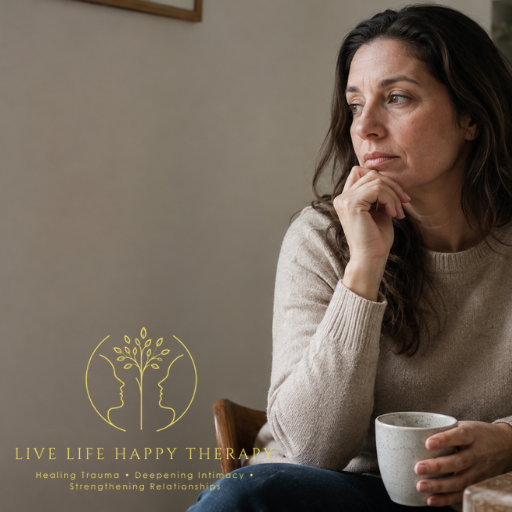
Over time, emotional over-responsibility can contribute to resentment. You may give and give, hoping that other people will notice what you need in return. When they don't, you may feel hurt or unappreciated. Then comes guilt for feeling resentful. So you try harder. This can become a cycle: Notice someone else's feelings → feel responsible → try to fix things → ignore your own needs → become overwhelmed or resentful → feel guilty → try even harder. Eventually, you may reach a point where you no longer know what would make you happy.
“But What If I Really Have Upset Someone?”
Taking less responsibility for other people's emotions does not mean becoming uncaring or refusing to take accountability. There will be times when our behaviour hurts somebody. Healthy relationships involve being able to listen, reflect and repair when necessary.
The difference is recognising that there are two separate responsibilities. You can be responsible for your behaviour. The other person is responsible for experiencing, expressing and working through their emotions. You can apologise without having to make their discomfort disappear.
You can disagree with someone and still care about them. You can make a decision that is right for you even if somebody else wishes you had chosen differently. You can allow another adult to feel disappointed without immediately changing yourself to remove that disappointment. That can feel surprisingly difficult when you have spent years doing the opposite.
Why Boundaries Can Bring Up Guilt
People often imagine that once they understand the importance of boundaries, setting them should feel empowering. Sometimes it does. But sometimes boundaries feel awful at first.
You might say no and then replay the conversation for hours. You might worry that you sounded rude. You might feel compelled to send another message explaining yourself. You might wonder whether you are being selfish.
This does not necessarily mean the boundary was wrong.It may simply mean you are doing something unfamiliar. If you are accustomed to prioritising connection, approval or harmony above your own needs, tolerating another person's disappointment can feel uncomfortable.
Learning boundaries is therefore not only about finding the right words. It can also involve learning how to sit with the feelings that come afterwards.
Are You Empathetic - or Hyper-Aware of Other People?
Many people who struggle with emotional over-responsibility describe themselves as highly empathetic or sensitive. And they may well be. But sometimes what feels like empathy can also include constantly scanning other people for signs that something is wrong. There is an important difference between: “I notice that you're upset and I care about you.” and: “I notice that you're upset, so now I need to find out why, decide whether it is my fault and make you feel better.” The first allows connection. The second can leave very little room for you.
What Happens in Romantic Relationships?
These patterns often become particularly noticeable in intimate relationships. You may monitor your partner's mood closely. If they withdraw, you move towards them. If they seem unhappy, you try to fix the relationship. If there is tension, you struggle to leave it unresolved. You may find yourself doing more of the emotional work - initiating conversations, checking in, analysing what went wrong and trying to restore closeness.
Your partner's emotional state can begin to determine your own. When they are okay, you relax.
When they are not, your nervous system may feel as though something needs to be solved. This can create exhausting relationship dynamics, particularly if one person frequently pursues reassurance while the other needs space or withdraws when overwhelmed.
The more one person tries to repair the connection, the more the other may pull away. And the more they pull away, the stronger the urge to fix things can become.
Learning to Ask: “What Am I Feeling?”
If you have spent years focusing on other people's emotional worlds, reconnecting with your own may take practice. You might begin by noticing moments when you automatically move into fixing mode.
Before responding, pause and ask yourself:
What am I feeling right now?
What am I assuming about the other person?
Have they actually asked me to fix this?
What is mine to take responsibility for here?
What belongs to them?
What do I need?
You do not have to become less caring. The aim is to develop relationships in which your care for other people does not repeatedly come at the expense of yourself.
You Can Care Without Carrying Everything
One of the hardest things to accept can be that somebody you love may occasionally be disappointed, frustrated or unhappy with you. And the relationship can still be okay. You do not have to immediately fix every uncomfortable feeling.
You do not have to prevent every disagreement. You do not have to earn closeness by being endlessly accommodating. Healthy emotional connection leaves space for two separate people - with different needs, feelings, opinions and boundaries - to remain connected without one person becoming responsible for regulating the other.
Learning this can feel unfamiliar, particularly if over-responsibility has been part of your relationships for a long time. But understanding where the pattern comes from can be the beginning of changing it.
How Therapy Can Help
Therapy can offer a space to explore why you feel so responsible for the people around you and what happens internally when you try to prioritise yourself. Rather than simply telling yourself to “stop people-pleasing”, we can become curious about what the pattern is protecting you from.
Perhaps it is conflict. Rejection. Disappointment. Guilt. The fear of being thought selfish.
Or the fear that if you stop taking care of everybody else, your relationships may change.
Understanding these deeper emotional patterns can help you begin responding differently - not by becoming less compassionate, but by developing a stronger sense of where you end and someone else begins. You can care deeply about other people while also making room for yourself.
Therapy for Relationship Patterns, People-Pleasing and Emotional Overwhelm
At Live Life Happy Therapy, I work with individuals and couples who feel stuck in recurring emotional and relationship patterns. You may understand yourself well and still find that the same reactions keep appearing. Perhaps you overthink, feel responsible for keeping relationships together, struggle to express your needs, or find yourself repeating patterns you thought you had already understood.
Therapy can help us explore what is driving those patterns at a deeper level, helping you move towards greater emotional safety, self-trust and more connected relationships. If you recognise yourself in this article and would like support understanding the patterns that keep showing up in your relationships, you are welcome to get in touch with Live Life Happy Therapy to find out more.


Comments